DeleteMe vs Incogni: how the two removal services differ

On this page
DeleteMe vs Incogni is the comparison most people land on once they decide they are tired of filing opt-outs by hand. Both services send removal requests to data brokers for you and keep sending them while you subscribe. They are built differently, though. DeleteMe grew up around US people-search sites, the ones that show your address to anyone who types your name. Incogni sends requests to a much longer list of brokers, many of which never show anything in public, and it works across Europe as well as North America.
Which difference matters depends on what is bothering you. Below are the criteria I would use, a plain side-by-side table, and a frank section on when you need neither.
How we compared: we read each company's own plan pages, help-center articles and refund terms as they stood in October 2026, plus the published reviews named below; we did not run either service.
Privacy toolkit for this job
- NordPassEmail Masking (Premium and Family plans) gives each form its own forwarding address, so brokers never get your main inbox.Start with NordPass
 The Art of Invisibility (Kevin Mitnick)Kevin Mitnick's readable overview of how tracking works, for the reader who wants the bigger picture.Last Amazon check Oct 28, 2026, 11:25 AM CT: $11.59On Amazon
Picked from published documentation and reviews, not our own testing. We earn a commission from some services we link to. As an Amazon Associate I earn from qualifying purchases. Product prices and availability are accurate as of the date/time indicated and are subject to change. The full Privacy kit
Five things to compare before you look at either
- Coverage, and what kind. A count of "brokers covered" mixes two very different groups: people-search sites, which publish listings anyone can see, and private-database brokers, which sell data to other businesses. If your worry is a stranger finding your street address, the people-search number is the one that counts.
- How often requests repeat. Listings come back when a site buys fresh records. A service that rechecks every few months catches more of that than a one-time sweep.
- What the reports show. You want to see which sites had your data, what was requested and what was confirmed, not just a running total.
- Custom requests. Sooner or later you will find a site that is not on the list. Can you send them a link, and is that included in the plan you are buying?
- Getting out. How cancellation works, what the refund terms are and what happens to the details you gave them.
Side by side
| DeleteMe | Incogni | |
|---|---|---|
| Main focus | US people-search and data broker sites | Data brokers broadly, including private databases |
| What it says it covers | 96 sites on its Standard US plan list; 969 brokers across all plans and custom requests | More than 420 brokers with automated requests; about 100 people-search sites, for US customers only |
| How often it repeats | A new privacy report every three months, with monitoring between | Requests repeat at least every 60 days for people-search sites and every 90 days for private brokers |
| Reports | First report within about seven days, then four a year | Live dashboard with statuses, plus monthly email updates |
| Custom requests | Submit a link from the dashboard; handled by its staff | Unlimited links, but only on its Unlimited, Family Unlimited and higher plans |
| Who does the work | Staff it calls privacy experts, plus software | Mostly automated requests, with a privacy team for custom removals |
| Where it works | US, plus 11 other countries including Canada, the UK and Australia | US, Canada, UK, EU, Switzerland, Norway, Iceland, Liechtenstein |
| Refunds | Full refund before your first report, pro-rated after | 30-day money-back guarantee, once per customer |
| Price | See the current price on its site | See the current price on its site |
Privacy kit
- The Art of Invisibility (Kevin Mitnick)A readable overview of tracking and how to limit it.Last Amazon check Oct 28, 2026, 11:25 AM CT: $11.59On Amazon
 Identity-blocking roller stamp (3 pack)Hides your name and address on labels and letters before they go in the bin.Last Amazon check Oct 28, 2026, 11:25 AM CT: $29.97On Amazon
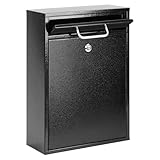 Wall-mount locking mailboxKeeps bank letters, new cards and tax forms out of reach of mail thieves.Last Amazon check Oct 28, 2026, 11:25 AM CT: $49.99On Amazon
Chosen from specifications, policies and published reviews; we have not tested these ourselves. Product prices and availability are accurate as of the date/time indicated and are subject to change. More in the Privacy kit
How DeleteMe works
You fill in what DeleteMe calls a datasheet: full name, date of birth, current and previous addresses, phone number and email. Its help center says you can add up to six each of names, addresses, phone numbers and email addresses, which matters if you have moved or changed your name. Its staff and software then search the sites on your plan and send opt-outs where they find you.
Your first privacy report arrives within about seven days of sign-up. DeleteMe is careful to say that report is a status update, not proof that everything is gone, because some sites remove a listing at once and others take weeks. After that you get four reports a year, one every three months, listing each site, what it showed and where the removal stands. If you spot a listing between reports, you paste its link into a custom removal request and its team takes it from there.
Two limits are worth reading before you pay. DeleteMe's help center says it cannot remove public records such as property records, voter registrations and some court records, and that it cannot act on sites with no opt-out at all. It also says PeopleConnect, the parent of Intelius, TruthFinder and Instant Checkmate, does not honor opt-outs DeleteMe files on a customer's behalf, so you would still do those yourself through the PeopleConnect Suppression Center.
On cancellation, DeleteMe says you can cancel or turn off renewal at any time, get a full refund if you have not received your first privacy report, and get a pro-rated refund for unused time after that.
How Incogni works
Incogni asks for your full name, date of birth and home address, and a phone number if you live in the US. You also sign an authorization form so it can act for you with brokers. You can add up to three email addresses, three home addresses and, for US customers, three phone numbers.
Its help center is open about a detail many people miss: most US data brokers do not publish searchable listings, so Incogni cannot check whether they hold your data. It uses an algorithm to predict which brokers probably do and sends requests to them anyway, which means some requests go to companies that never had your file. For people-search sites, which it covers for US customers only, it says it runs random checks and files complaints when a site fails to comply.
The dashboard sorts brokers into statuses such as completed, in progress, scheduled and suppressed, and gives each broker a compliance score based on how quickly it has handled past requests. You also get a monthly email update. Custom removals, where you send a link to a site that is not on the automated list, come only with the Unlimited plans. Incogni says its team works on three of your links at a time and that some can take up to 45 days.
Incogni offers a 30-day money-back guarantee on your first purchase, one per customer. Subscriptions renew automatically until you cancel, and if you bought it inside a bundle from Surfshark or NordVPN, cancellation and refunds go through that company instead.
What published reviews add
The most useful outside evidence on DeleteMe is Consumer Reports' report "Data Defense: Evaluating People-Search Site Removal Services", published in August 2024. Working with the safety group Tall Poppy, Consumer Reports signed volunteers in California and New York up for seven services between May and September 2023 and checked 13 people-search sites afterward. DeleteMe had removed 27 percent of the profiles found within four months. Manual opt-outs done by the researchers reached about 70 percent. Consumer Reports itself cautioned that the sample was small, that the services were given only basic details, and that the volunteers did not use dashboards or answer follow-up questions, all of which could hold results down. Services have also changed since 2023.
Incogni was not part of that study. What it offers instead is a limited assurance report from Deloitte, dated August 2025, which confirmed that as of July 2025 Incogni covered more than 420 brokers, sent recurring requests within the 60 and 90 day intervals it advertises, and did not sell customer data during 2024. Limited assurance is a lighter level of review than a full audit, and it speaks to process: requests sent on schedule, not how many listings disappeared.
Two others you will see in the same searches
Optery has a free plan that shows where you appear and links to each site's opt-out, so you can do the work yourself, and paid plans that file requests every month. Its higher plans add before-and-after screenshots and unlimited custom requests. In the Consumer Reports study it had the highest removal rate among the paid services, at 68 percent after four months.
Aura includes data broker removal in its identity theft protection plans. Its page says it covers more than 425 brokers and people-search sites and rescans daily. It makes more sense if you want credit monitoring and the rest of that bundle anyway.
Who each one suits
DeleteMe fits someone whose problem is visible: a home address on people-search sites in the US, maybe several old addresses and a former name. The human-handled custom requests, the six-of-each datasheet and the quarterly site-by-site report all point at that job. Expect to handle the PeopleConnect sites yourself.
Incogni fits someone who wants requests going to the private side of the industry too, the marketing and risk brokers that never show a public page, or who lives in Canada, the UK or the EU, where it files under local privacy laws. The 60 and 90 day repeat cycle is its strongest point. If you also want people-search links handled by hand, budget for the Unlimited plan.
When you need neither
Plenty of people do not need a subscription at all.
- Your listings are few. If a search turns up your address on four or five sites, an evening with the forms in our guide to removing your information from people-search sites and a recheck every three months may be all it takes. The Consumer Reports numbers above suggest careful manual opt-outs hold up well.
- You live in California. The state's free Delete Request and Opt-out Platform sends one deletion request to every registered data broker, and since August 2026 those brokers must process the list at least every 45 days. It reaches registered brokers only, so check the big people-search sites as well. Judith explains the details in California's Delete Act and DROP.
- You mainly worry about relisting. That is a calendar problem more than a money problem. My piece on why listings come back after you opt out has a maintenance routine, and the opt-out checklist keeps track of where you stand.
Before you sign up for either
- Search for yourself first and write down which sites show you. That list is how you will judge any report.
- Read the refund terms, and note the date your refund window closes.
- Use a dedicated email address for removals, so confirmation emails do not get lost.
- Remember that you are giving one more company your date of birth and addresses. Both say they use them only for removals; read their privacy policies before you hand them over.
- Set a reminder before renewal and decide then, with the reports in front of you, whether the service earned another year.
Your next three steps
- Run the free route first: the opt-out guide covers the big sites in an evening.
- If you pay, keep the opt-out checklist anyway, for the sites a service does not cover.
- Check what a service files against what DeleteMe and Incogni publish about their coverage before you choose.
Related briefings
- Remove Your Data
How to remove your home address from Google search
Where your address shows up in Google, which removal route fits each kind of result, and what Google will not take down. A calm, step by step routine.
- Remove Your Data
How to stop prescreened credit and insurance offers
Prescreened card and insurance offers start in your credit file. How the official opt out works, how to read the notice and what the opt out will not stop.
- Remove Your Data
How to remove yourself from TruePeopleSearch
How to remove yourself from TruePeopleSearch: the removal page, the security check, the phone opt-out in its privacy notice, look-alike sites and rechecks.